Ceylon Tea Country Guide: Nuwara Eliya, Hatton, Ella & Best Factory Tours (2026)

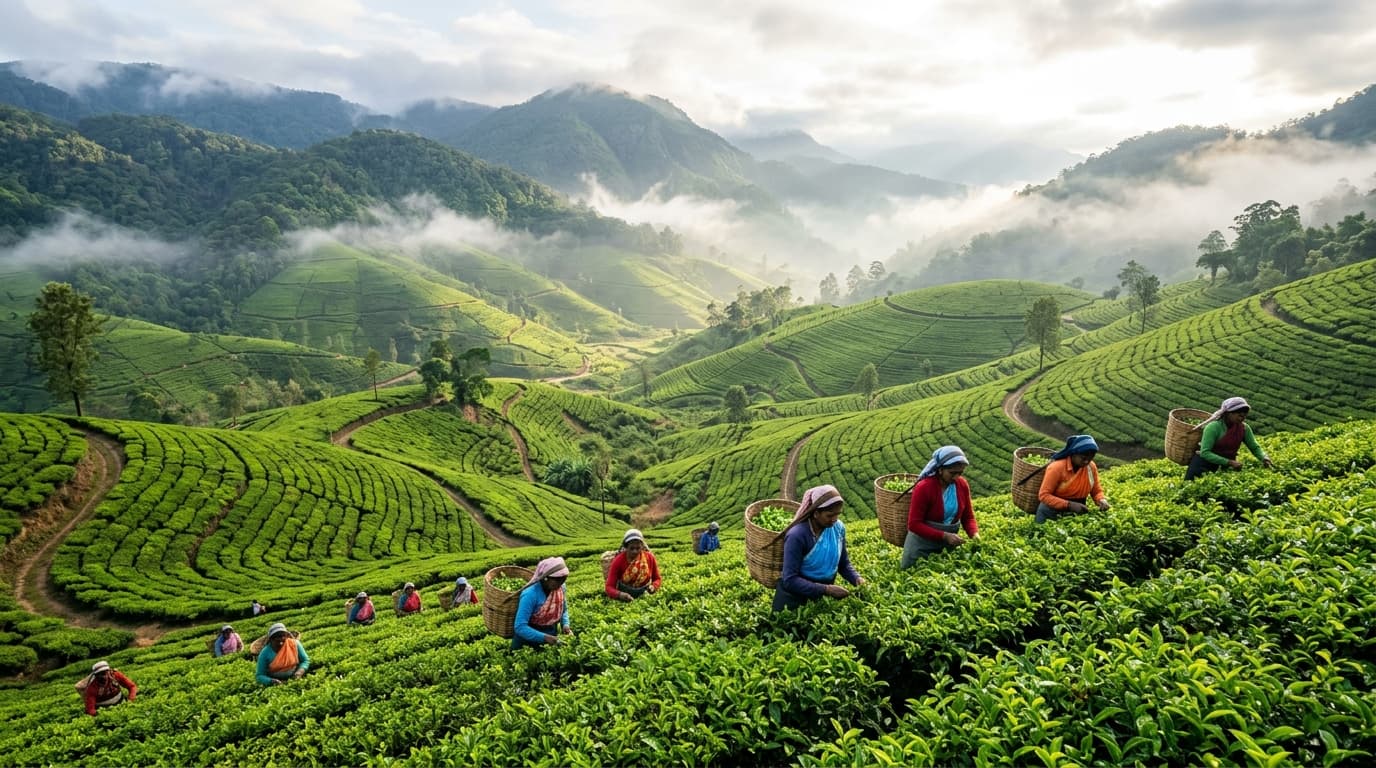
The Golden Leaf of Ceylon: An Empire Built on High-Altitude Mist
Ceylon Tea is recognized globally as the gold standard of orthodox black tea. In the 1860s, after a devastating coffee rust fungus wiped out Sri Lanka's coffee industry, a pioneering Scotsman named James Taylor planted the first commercial nineteen acres of tea at Loolecondera Estate in Kandy, igniting a green revolution that transformed the island's mountain landscape forever. Today, Sri Lanka is the world's fourth-largest tea producer, renowned for maintaining traditional orthodox hand-plucking and artisanal rolling methods rather than mass machine harvesting. Traversing the emerald slopes of the Central Highlands (where terraced tea bushes cascade down mist-shrouded valleys punctuated by roaring waterfalls) is an essential pilgrimage for any visitor.
The 'Two Leaves and a Bud' Secret: Authentic Ceylon tea is plucked strictly by hand: skilled female tea pluckers select only the top two tender leaves and the central unopened bud, guaranteeing delicate flavor, bright liquor, and antioxidant richness.
The Three Tea Capitals: Nuwara Eliya vs. Hatton vs. Ella
Each tea region possesses its own distinct elevation, character, and flavor profile: • Nuwara Eliya ('Little England', 1,868m): The highest elevation tea district. Known as the 'Champagne of Ceylon Teas', the leaves produce a delicate golden infusion with floral aromas. The town features Tudor-style colonial post offices, golf clubs, and Lake Gregory. • Hatton & The Bogawantalawa Valley ('The Golden Valley', 1,200m): The undisputed luxury capital. Home to Ceylon Tea Trails, featuring restored colonial tea planter bungalows where guests sip single-estate teas beside log fireplaces overlooking the mirror-still Castlereagh reservoir. • Ella (1,041m): A bohemian highland sanctuary surrounded by steep pine ridges, famous for the Nine Arch Bridge, hiking Little Adam's Peak, and boutique cafes overlooking the Ella Gap.
Elevation Matters: High-grown teas (above 1,200m) are prized for subtle, aromatic complexity, while low-grown teas (from the south) produce dark, robust, malty liquors favored in Middle Eastern tea ceremonies.
Inside a Working Tea Factory: The Orthodox Process
Visiting an active 19th-century tea estate factory (such as Pedro Estate, Damro Labookellie, or Glenloch) reveals an unchanged industrial art: • 1. Withering: Freshly plucked green leaves are spread across large airy troughs for 12 to 18 hours to reduce moisture by 50%. • 2. Rolling: Heavy vintage British brass rollers twist and crush the withered leaves, rupturing cell walls to release natural essential oils and enzymes. • 3. Fermentation (Oxidation): The crushed green leaves are laid on ceramic tables where oxygen transforms them into a rich copper-red hue, unlocking aromatic tea compounds. • 4. Firing (Drying): Passing through high-temperature wood-fired kilns halts oxidation and turns the leaves into crisp black tea. • 5. Grading: Vibration sifters sort the dried tea into recognized international grades: Orange Pekoe (OP), Broken Orange Pekoe (BOP), and Dust. • 6. Professional Tea Cupping: The tour concludes with an authentic tea tasting session comparing delicate Silver Tips (white tea) against strong BOPF brews.
White Tea / Silver Tips: The rarest tea in the world is Virgin White Tea, hand-harvested using golden scissors without touching the human skin, producing a pure antioxidant liquor that sells for over fair rates per kilogram.
High Tea Traditions & Colonial Planter Bungalows
No highland journey is complete without indulging in an authentic colonial afternoon high tea: • The Grand Hotel Nuwara Eliya: Sip high tea in manicured English rose gardens, served with cucumber sandwiches, fresh highland strawberry tartlets, and warm scones with clotted cream. • Ceylon Tea Trails (Hatton): Experience private butler service on manicured lawns overlooking Castlereagh lake, where single-estate teas are paired with gourmet artisanal desserts. • 98 Acres Resort (Ella): Enjoy scenic high tea perched atop a tea-covered ridge overlooking Little Adam's Peak and Ella Gap.
Strawberry Harvest: Nuwara Eliya's cool climate is also ideal for fresh strawberries. Stop at local strawberry farm cafes along the highway for fresh strawberry milkshakes and warm pancakes.
Frequently Asked Questions: Ceylon Tea Country
• Are tea factories open on Sundays and holidays? Most factory machinery operates Monday through Saturday when green leaf plucking is active; visitor tea centers and tasting rooms remain open 7 days a week. • Can I try plucking tea myself? Yes! Many working tea estates (like Pedro Estate or Damro) allow visitors to wear traditional woven baskets and try their hand at plucking tea leaves with the local estate pluckers. • How do we travel between tea estates? Navigating winding mountain switchbacks is physically demanding. Touring with an Amaya Lanka private chauffeur guide guarantees smooth, safe travel with panoramic photo stops at waterfalls along Ramboda Pass.
Plan Your Tea Country Escape: Message Senior Chauffeur Sugath Priyankara on WhatsApp at +94 72 558 2444 to tailor a luxury highland holiday with guaranteed private tea estate tours!
Want to Experience This on a Private Chauffeur Tour?
Every detail (including 1st/2nd class reserved scenic train tickets, dedicated chauffeur hosts, and boutique highland retreats) can be arranged seamlessly by Sugath Priyankara.
More Insider Travel Guides

Sri Lanka in July & August: Why the East Coast (Trincomalee & Pasikuda) is Paradise for Summer Holidays (2026)
Planning Your Sri Lanka Trip Budget in 2026: The Complete Financial & Cost Planning Guide